

Café · Birmingham · ⭐ 9.1/10 · 2134 reviews · updated: 2026-08-10 15:35:16
Address: 21 Colmore Row, Birmingham B3 2BH, United Kingdom
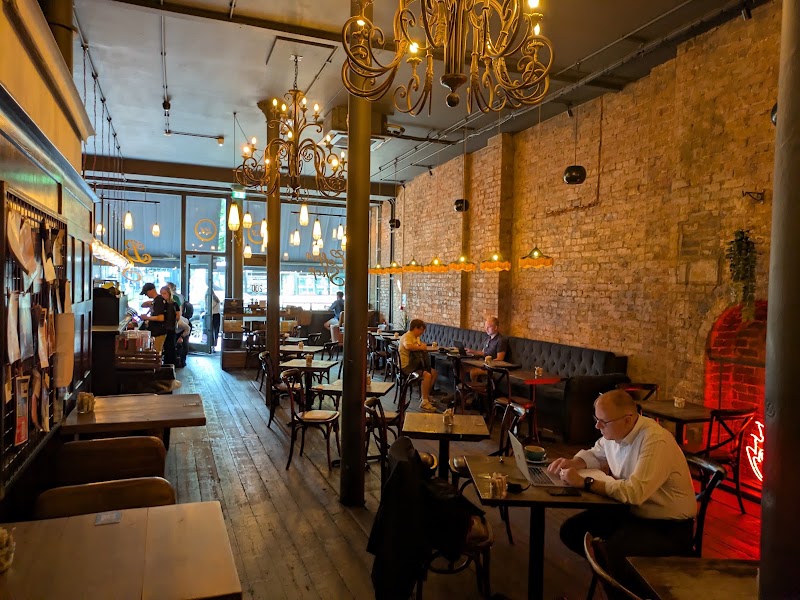
There is a particular kind of coffee business that gets built when a restaurateur cannot find a supplier good enough and decides to do the job himself. 200 Degrees Coffee Shop & Barista School is the Birmingham branch of exactly that: a Nottingham roastery that started in a garage in 2012, grew into a business that roasts by the tonne, and then opened its own shops so that the coffee it roasts would be served the way it intended. The Birmingham room sits under a Victorian hotel facing the cathedral, seats ninety on the ground floor, and hides a teaching bar in the basement — which tells you that this is a coffee company with a classroom, not a café with a bag of beans.
Highlights
- A working roastery behind the counter, not a brand story. The company roasts more than two hundred tonnes of coffee a year at its own roast house in Nottingham and supplies its shops from it.
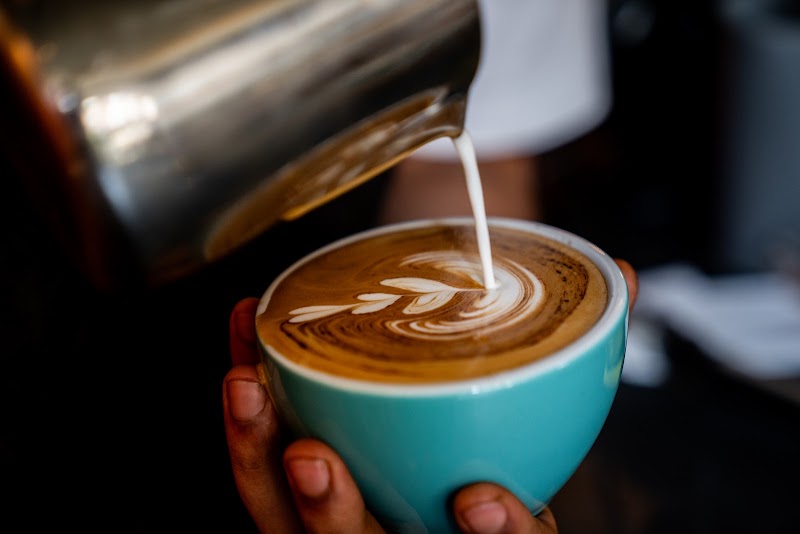
- A barista school in the basement — one of seven the company runs across the country — teaching brewing methods, dialling in, milk steaming and latte art to professionals and to anyone curious enough to book.
- Ninety seats on the ground floor, which in this part of the city centre makes it one of the few coffee rooms where you can reliably find a table rather than hover.
- A private meeting room downstairs holding sixteen seated or twenty-five standing, bookable for seminars and small events, with a short barista workshop available as part of the package.
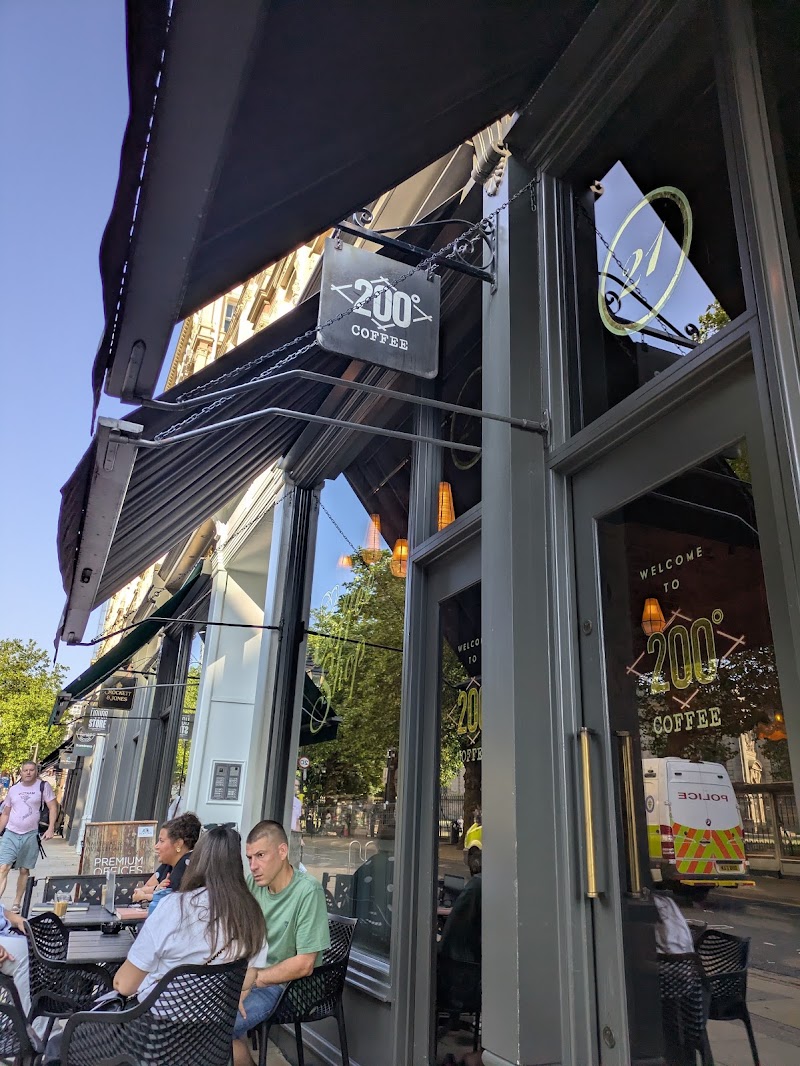
- A Victorian setting with a serious address: the shop occupies the ground floor beneath the Grand Hotel, looking out at the cathedral and backing onto the creative quarter behind it.
- Owned since late 2024 by the Nero Group, which bought the business but left it running as a standalone brand with its own roastery, wholesale arm and management.
What’s in the cup
The honest description of 200 Degrees is that it is a roaster that sells its own coffee at retail, and the cup should be judged on those terms. This is not a multi-roaster bar rotating a Kenyan lot every fortnight and inviting you to compare processing methods. It is a house whose blends are designed to hold up identically in twenty-odd shops, on five hundred wholesale bars, and in a bag posted to somebody’s kitchen — and that design brief is a real discipline, not a lesser one. A blend that has to survive a chain of different machines, different water and different hands is harder to build than a single origin poured by its own roaster on a Saturday morning.
The roasting happens at the company’s roast house in Nottingham, opposite the football ground, and the volume is public: over two hundred tonnes a year. The founders’ route into it is the part worth knowing. One of them was running bistros, could not find coffee good enough to serve in them, and started roasting his own; the pair set up around an old roaster in the corner of a garage in 2012, having caught the obsession on the other side of the world in New Zealand — which is where the flat-white-first, milk-friendly style of the house ultimately comes from. On sourcing the company keeps it modest and specific: it works through importers to build relationships with growers, and frames it as wanting the cup to do some good rather than making claims it cannot stand behind.
Practically, that means you should order this house’s espresso in milk with confidence and expect a settled, consistent, slightly sweet profile rather than a bright one. Filter and the wider brew repertoire are there — this is a business that teaches brewing methods for a living — but the centre of gravity is the espresso bar. If you want a rotating single origin and a conversation about fermentation, there are two independents within a few minutes’ walk that will give you exactly that; this room is offering something different and doing it deliberately.
Who’s behind it
200 Degrees was founded in Nottingham in 2012 by Rob Darby and Tom Vincent, working out of a garage with a second-hand roaster and no shops at all. The retail side came later, as a way of controlling how the coffee reached people. Today the business describes itself as standing on four pillars — the shops, the wholesale arm serving more than five hundred customers, the online shop with its subscriptions, and the barista schools — and the Birmingham site is one of the few places where three of those four are visible in the same building.
In October 2024 the Nero Group bought the company, making 200 Degrees the fifth brand in a portfolio that already included Caffè Nero, Coffee#1, Harris+Hoole and Aroma. Two things about that are worth saying plainly, because acquisitions usually mean something changed. First, it is real: this is no longer an independent business in the ownership sense. Second, the terms were unusually hands-off — the brand continues to trade under its own name, the Nottingham roastery keeps roasting, the wholesale and e-commerce arms continue, and the existing management stayed in place. Whether that holds over a decade is nobody’s guess to make; what is true today is that the coffee in this room still comes from the same roast house it did before.
What it’s for
This is the most straightforwardly useful room on this list, and its usefulness is a function of size.
Working with a laptop is what ninety seats are for. In a district where every independent café is a twenty-seat box that fills by the middle of the morning, a room of this scale means you can arrive, find a table, and stay without doing arithmetic about whether you are outstaying your welcome. The format is built for turnover and for lingering at the same time, and nobody is going to lean over your screen. It is a chain-scale room in the best sense: predictable, well staffed, and not precious about how long a coffee lasts.
Meetings are the second thing it does better than its neighbours. The basement room takes sixteen around a table or twenty-five standing and can be booked, which in the business district is a genuinely scarce resource — most of the alternatives are either a hotel lobby or a formal boardroom. The team also sells a short barista workshop alongside it, which is the sort of thing that rescues an away-day from a slide deck.
For a conversation over a table it works fine, though at peak the volume rises with the seat count; the edges of the day are quieter. For takeaway it is efficient — a big counter with a queue that moves. And for the visit that is specifically about coffee, the barista school downstairs is the reason to come: this is one of the few places in the city where a member of the public can book time on a proper bar and be taught to use it.
The space
The building does a lot of the work. The shop occupies the ground floor beneath a grand Victorian hotel, one of the handsome nineteenth-century frontages that give this stretch of the city centre its character, and it looks out directly at the cathedral and its churchyard — which is the best view any coffee room in the business district has, and one of the few places in central Birmingham with trees in the window.
Inside, the ninety seats are spread across a room laid out in the modern coffee-house idiom: a long counter, a mix of table sizes, benches and communal-style seating, hard surfaces and a lot of daylight. That means it is bright and easy to find a seat in, and also that it is not a quiet space when it is full — hard surfaces and ninety people are a predictable combination. The basement is a different world: the barista school and the meeting room are enclosed, and the noise of the main floor does not follow you down.
The building backs onto the creative quarter behind the cathedral, so the crowd is more mixed than a pure office café would suggest — solicitors and accountants at one table, designers and students at the next.
Beyond coffee
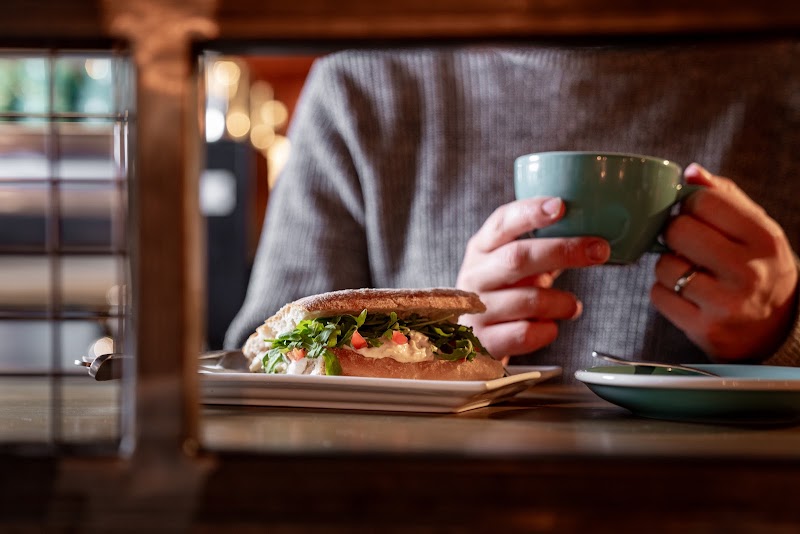
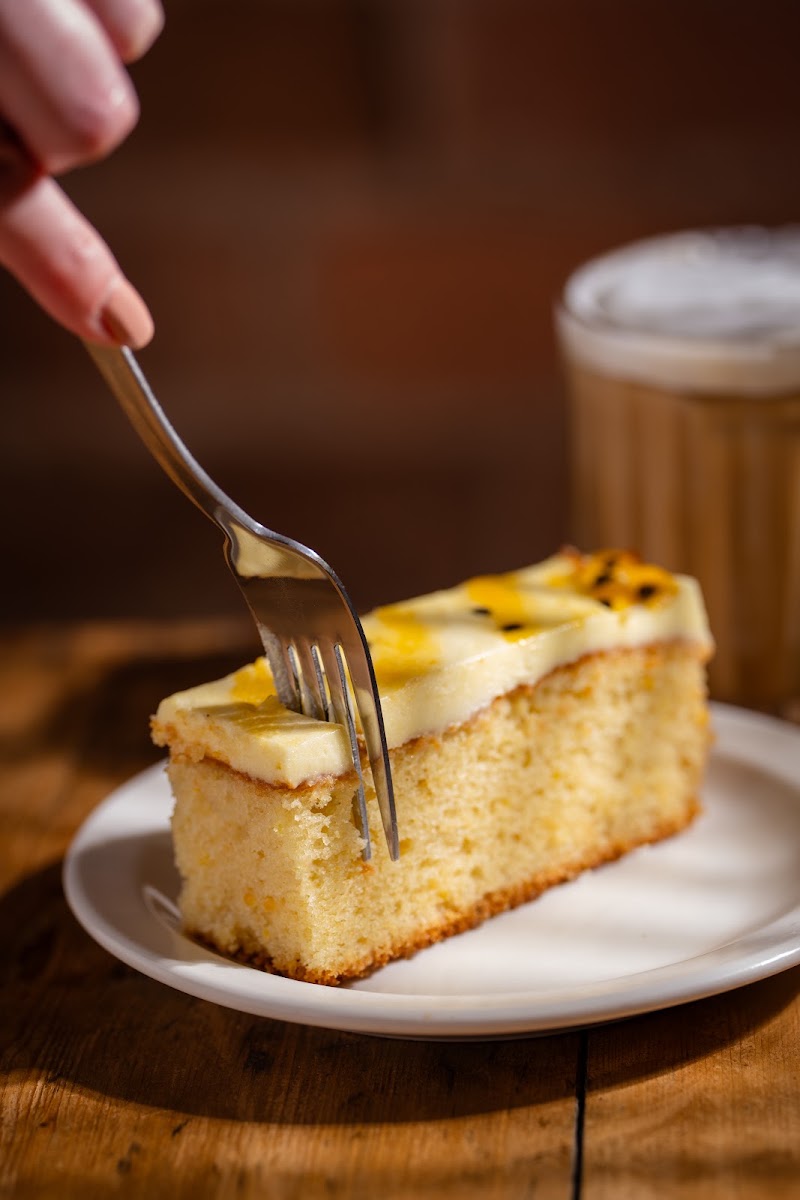
The food operation follows the same logic as the coffee: consistent, broad and built to be available all day rather than to be the reason you came. Expect the standard modern coffee-shop provision — things to eat with a coffee in the morning, sandwiches and something warm in the middle of the day — supplied to the same specification across the group rather than made from scratch behind this particular counter. That is worth knowing so you calibrate: this is not a room that is going to surprise you with a bakery programme, and it does not pretend to be.
What it does sell that most cafés do not is coffee itself, as an object. Retail bags of the house roasts are stocked, along with the equipment side of the business, and the same coffee is available by subscription. If you have been drinking the espresso here for a year and want to make it at home, this is one of the few shops in the city centre where the roaster, the shop and the bag are the same company.
When to come
The rhythm here is the business district’s rhythm, amplified. It opens well before the working day starts, which makes the early part of the morning the best window of the entire day: the room is calm, the seats are free, and the coffee is coming off a bar that has not yet been running flat out for hours. The middle of the day is the peak, when the surrounding offices come down for lunch, and it is loud and full without being unpleasant.
The afternoon settles again and is the sweet spot for laptop work — the lunch crowd has gone back to their desks and the room is at maybe half capacity. Evenings here are quieter than the surrounding restaurant scene, and the shop closes earlier than a bar would. Weekends run to a different and shorter pattern, since a coffee shop under an office district loses most of its regulars on Saturday and Sunday — the crowd becomes shoppers and visitors instead, and the mood is more relaxed. As always, take the operating times from the card on this page rather than from anyone’s prose.
Getting there
The shop is in the middle of the city’s business district, on the ground floor of the Victorian hotel that faces the cathedral. If you can find the cathedral churchyard — the walled green square with the trees, right in the centre — you are effectively there; the shop looks onto it from across the road.
Every rail approach works. Snow Hill station is a couple of minutes to the north, New Street station and Grand Central are a short walk south under the shopping centre, and Moor Street station is a similar walk to the east. The Metro tram runs through the centre nearby, and the district is dense with bus routes. Driving is the wrong answer: the streets around here are a mixture of pedestrian zones, bus gates and clean air zone charges, and the walk from any station is shorter than the search for a space.
Good to know
Book the meeting room in advance if you want it — it is the scarcest thing the site offers and the whole district knows about it. The barista school is also bookable rather than walk-in, and it is worth checking what is running before you plan a visit around it; the schedule is a company-wide programme rather than something improvised in Birmingham.
Set your expectations by category. This is a roaster’s shop operating at chain scale, so the strengths are consistency, seating, staffing and the ability to buy the same coffee to take home; the weaknesses are the ones scale always brings — the food is specified rather than crafted, the room is loud at capacity, and you will not be offered a Panamanian lot to compare against a Colombian. The independents nearby cover that gap and this shop does not try to compete with them on it.
Finally, the ownership change is a fact rather than a warning. Since late 2024 the business has belonged to the group behind Caffè Nero, and it is fair to know that before you form an opinion about how independent your coffee is — but the roastery, the brand and the management continued as before, and the cup on the table has not been outsourced.
Questions and answers
Does 200 Degrees roast its own coffee?
Yes. The company runs a roast house in Nottingham and roasts more than two hundred tonnes a year there, supplying its own shops, over five hundred wholesale customers and its online shop from the same operation.
What is the barista school and can anyone use it?
It is a teaching bar in the basement, one of seven the company runs nationally, covering brewing methods, dialling in an espresso, steaming milk and latte art. Classes are booked rather than walked into, and they are aimed at both trade and interested amateurs.
Is this a good place to work from with a laptop?
It is one of the better ones in the district, mainly because of the ninety seats on the ground floor — you can normally get a table and stay at it. The afternoon is the calmest working window; the middle of the day is loud.
Can I book a room for a meeting?
Yes. The basement meeting room takes sixteen seated or twenty-five standing and is available for meetings and seminars, with an optional short barista workshop that can be added for a team session.
Is it still an independent business?
Not in the ownership sense. The Nero Group acquired it in October 2024, making it the fifth brand in the group. It continues to trade under its own name with its own roastery, wholesale arm and management.
How big is the group?
It grew from a garage in Nottingham in 2012 to more than twenty shops and seven barista schools around the country, alongside the wholesale and online sides of the business.
What should I order here?
Espresso in milk is what the house style is built for — the roasting profile comes out of the Antipodean school the founders picked up in New Zealand. Filter and other brew methods are available, but the espresso bar is the centre of gravity.
Can I buy the coffee to take home?
Yes, in bags at the counter, and the same roasts are sold online by subscription. Because the roaster and the shop are one company, what you buy is the coffee you have been drinking here.
Is it noisy?
At capacity, yes — ninety seats and hard surfaces do what you would expect. Early morning and mid-afternoon are noticeably calmer, and the basement rooms are insulated from the main floor.
Opening hours
| Day | Hours |
|---|---|
| Monday | 07:00–20:00 |
| Tuesday | 07:00–20:00 |
| Wednesday | 07:00–20:00 |
| Thursday | 07:00–20:00 |
| Friday | 07:00–20:00 |
| Saturday | 08:00–19:00 |
| Sunday | 09:00–18:00 |
Photos
Visitor reviews
Reviews last updated: 2026-08-10 15:35:16
Data is refreshed monthly. Sources: birminghamka.com and editorial picks based on reviews.
Quiet cafe on a Saturday morning with plenty of seating. I like the dim lighting here. The americano and chocolate croissant were solid.
Стильна кав’ярня смачний кофе м’який Еспресо дуже сподобалось рекомендую
Чудова кав'ярня, персонал неймовірно привітний – менеджер (як вона стала менеджером, я не маю уявлення), однак, азійська жінка, мабуть, одна з найгрубіших людей, яких я коли-небудь зустрічав – проходила прямо повз брудні…
Це гарне кафе. Кава чудова. Але це не тихе місце; чути звуки життя та багато приємних розмов.
Я давно не був у кав'ярні "200 degrees coffee". Вчора був там і був шокований, наскільки погана їхня кава та обслуговування! Я був там близько 6 років тому, проходив їхній курс бариста, і все було чудово! Під час мого вч…